Seasonal mosquito management in North Texas addresses specific environmental conditions created by Trinity River drainage, neighborhood creek corridors, and hot, humid summer stretches. In areas near White Rock Lake…
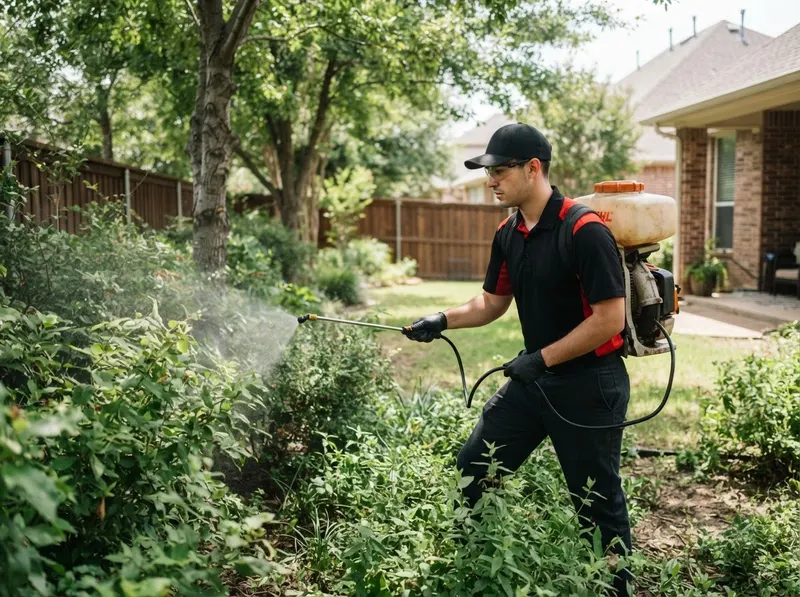
Seasonal mosquito management in North Texas addresses specific environmental conditions created by Trinity River drainage, neighborhood creek corridors, and hot, humid summer stretches. In areas near White Rock Lake and the Dallas Arboretum and Botanical Garden, mature trees and dense shrubbery create shaded resting microclimates for daytime-biting Asian tiger mosquitoes. Properties in Lakewood, Lake Highlands, and Preston Hollow often feature thick canopies, ornamental ivy, and complex automated sprinkler zones that retain pockets of moisture long after watering. A barrier mist applied directly to the underside of leaf canopies bonds to foliage, suppressing adult populations as they rest during peak daylight heat, while targeted larvicides in non-flowing runoff points prevent new generations from maturing.
Selecting standalone periodic barrier treatments versus continuous seasonal misting systems depends on property layout and irrigation exposure. For properties in Oak Cliff, Bishop Arts District, and Uptown with compact courtyard yards, targeted monthly barrier applications create a functional buffer zone around decks and patios without the hardware maintenance of permanent lines. In contrast, larger residential acreage in Far North Dallas with perimeter creeks may require integrated approaches combining barrier sprays with recurring microbial larvicide treatments every 21 to 30 days between April and October. A crucial non-obvious detail is that standard yard barrier sprays do not kill mosquito eggs deposited in dry soil or unmaintained containers; rain events rehydrate these eggs, requiring microbial treatments that remain active through repeated soakings.
Mosquito reduction functions through calibrated physical and biological suppression rather than permanent total eradication. Licensed applicators evaluate properties to differentiate between water features requiring Bacillus thuringiensis israelensis (Bti) granules, which affect only mosquito and blackfly larvae, and adult resting foliage requiring microencapsulated pyrethroids. While synthetic treatments dry within 30 to 60 minutes after application, allowing children and domestic pets to return to lawns, they cannot prevent adult insects from drifting across property fence lines from adjacent alleys in Deep Ellum or untreated public easements. Ground treatments establish an active contact zone that reduces localized mosquito activity by an estimated 70% to 90% when standing water sources are simultaneously corrected.
Every job gets a firm, written price after a free on-site visit.
Tell us about your mosquito reduction service job in Dallas and we'll send a clear, written quote, usually the same day.
 Red Wagon Pest Control