Rodent exclusion stops roof rats, Norway rats, and field mice from accessing residential interiors, while attic cleanup remediates the biohazards left in nesting zones. In North Texas, older wood-frame bungalows in Oak…
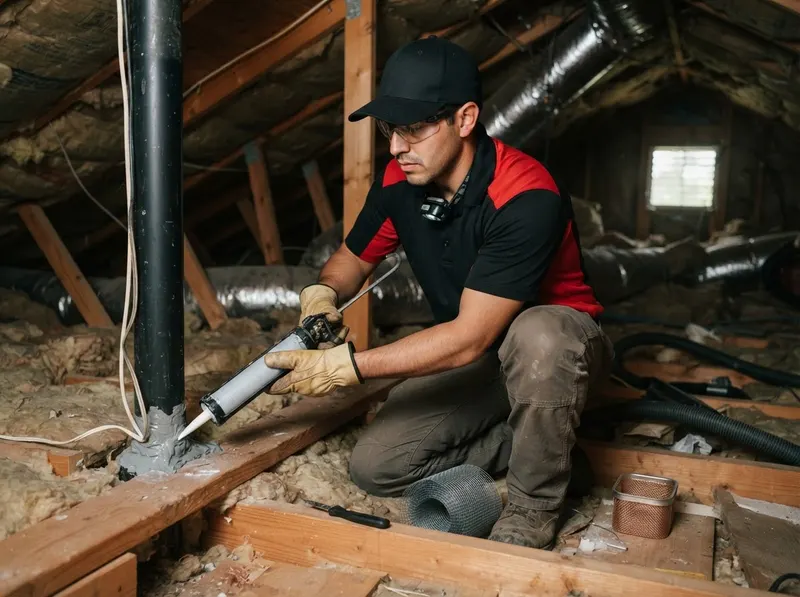
Rodent exclusion stops roof rats, Norway rats, and field mice from accessing residential interiors, while attic cleanup remediates the biohazards left in nesting zones. In North Texas, older wood-frame bungalows in Oak Cliff and Bishop Arts District frequently develop settling cracks along sill plates, while mid-century ranch homes across Lake Highlands and Lakewood face vulnerabilities at cedar soffits and roof returns. Brick-and-mortar homes in Preston Hollow and Far North Dallas regularly sustain invasions through gaps where air-conditioning chases and gas lines breach exterior masonry. Once roof rats enter an attic, they compress thermal insulation, chew Romex electrical lines, and soil surfaces with urine and droppings, causing airborne contaminants to migrate downward into living areas through ceiling fixtures and HVAC vents.
Exclusion relies on permanent physical barriers rather than poison baits or ongoing chemical traps. Technicians fit 1/4-inch galvanized steel mesh (hardware cloth) over gable vents, seal fascia gaps with custom metal flashing, replace damaged crawlspace vent covers, and close weep holes with stainless-steel mesh inserts that allow masonry ventilation without rodent access. Trapping programs run concurrently inside the structure until zero rodent movement remains. For homeowners choosing between repeated baiting and mechanical exclusion, bait traps offer temporary knockdown but leave open gaps for new litters to enter from surrounding tree canopies near White Rock Lake; mechanical exclusion permanently blocks access but requires an upfront labor investment to seal every structural gap wider than 1/4 inch.
Attic remediation addresses the physical contamination remaining after exclusion. High-powered vacuum units positioned outside the residence remove compressed, soiled cellulose and fiberglass insulation through negative-pressure containment hoses, preventing particulate release into indoor spaces. Technicians then treat exposed ceiling joists and subflooring with an EPA-registered enzymatic disinfectant to neutralize pheromones and bacterial pathogens. If ductwork sustained gnawing damage, techs seal the outer vapor barrier before blowing in fresh, high-density cellulose to achieve current Texas energy codes (R-38 value). Scheduling works sequentially: 1. A physical roof, soffit, and attic inspection identifies all structural entries. 2. Technicians install perimeter exclusion hardware and internal snap traps. 3. Crews extract contaminated insulation, apply the disinfectant mist, and blow in new attic insulation. Homeowners can reach dispatch at (945) 410-2399 to arrange an on-site structural assessment.
Every job gets a firm, written price after a free on-site visit.
Tell us about your rodent exclusion & attic cleanup job in Dallas and we'll send a clear, written quote, usually the same day.
 Red Wagon Pest Control